
You didn’t have a parent.
You had a narcissist.
A parent is supposed to create a safe, loving environment that helps guide you through life.
A narcissist does the opposite.
They rob you of everything you need to become a well-rounded adult.
And it’s a miracle you’ve made it this far.
The odds have been stacked against you your entire life.
But it doesn’t have to stay that way.
You can give yourself many of the things you missed out on during your childhood.
You can be the safe, loving, supportive adult you didn’t have.
It’s called reparenting.
And it’s how you’ll go from the person you are today to the person you want to be.
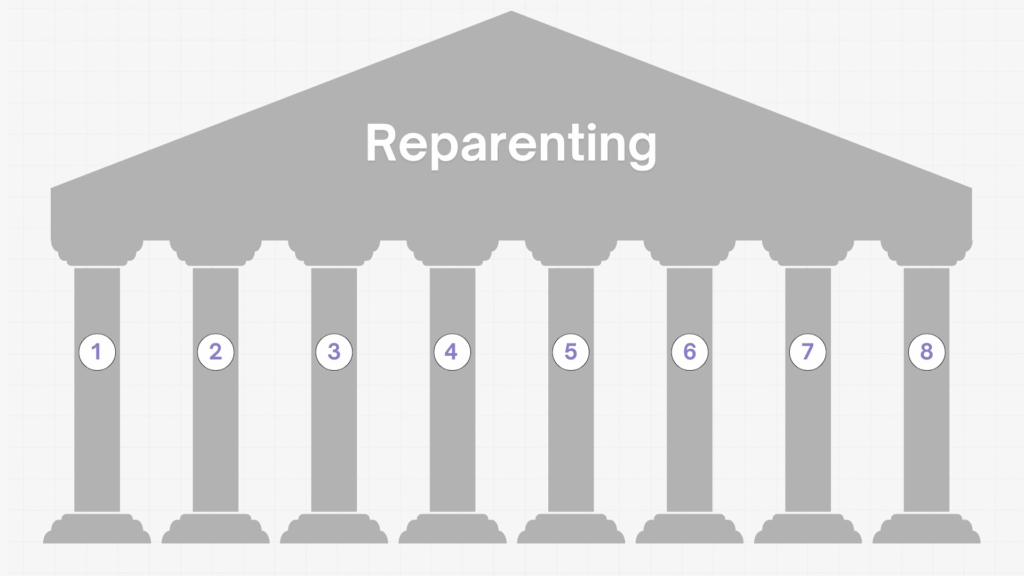
So in this article, I’m going to walk you through the eight core pillars of reparenting.
And for each one, I’ll explain what it means.
Then, Jennifer Parrella, a therapist with 21 years of experience, will explain why it’s important.
And finally, I’ll share examples of how people we work with are reparenting themselves so you can learn how to do it too.
If we’re just meeting — my name is Juliana Akin. I’m a founder of Unfilteredd, and we help you overcome the effects of narcissistic abuse so you can heal and move forward with your life.
1.) Self-Protection
The first pillar of reparenting is self-protection.
This means developing the ability to recognize what is unsafe, and being able to take action to protect your physical, emotional, mental, sexual, or financial well-being.
Jennifer says:
This is an important part of reparenting because it’s what allows you to start making decisions based on what’s truly best for you.
Without it, it’s like being stuck in the passenger seat of your own life.
You can try to give directions, maybe even reach for the steering wheel, but you’re still at the mercy of whoever or whatever is in the driver’s seat.
Learning how to protect yourself puts you in the driver’s seat — and from there, you can ensure that you, and the people who may depend on you, are always headed in the right direction.
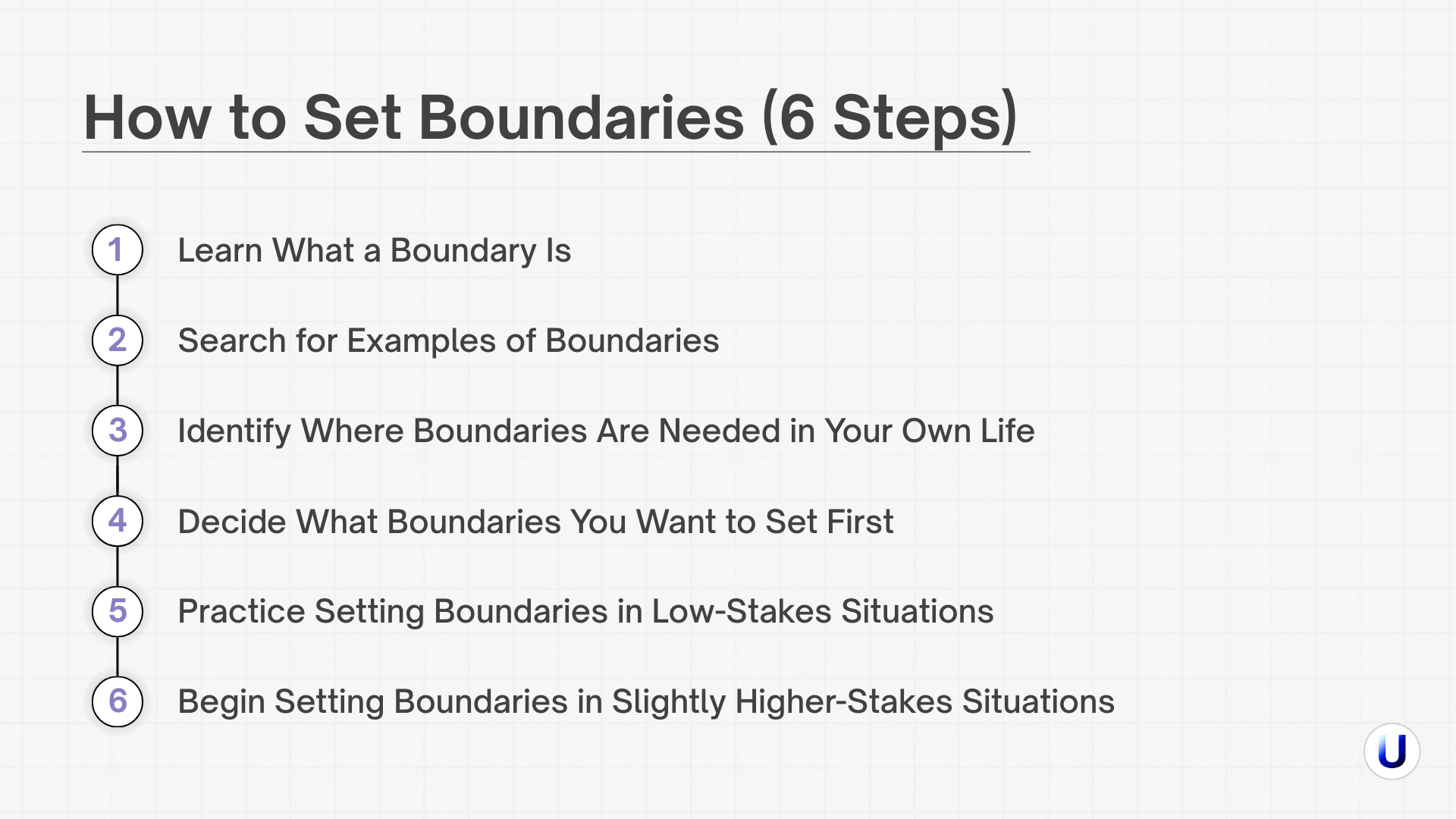
A woman we’re working with began reparenting herself in this area by using a six-step framework my team and I created to help people set boundaries.
The first step is to learn what a boundary is.
We define it as a personal rule you set to protect your physical, emotional, mental, sexual, or financial well-being.
For example:
- “I don’t want people hugging me without my permission.”
- “I only engage in intimacy when I feel comfortable and safe.”
- “I don’t spend more than X% of my income on non-essentials.”
The second step is to search for examples of boundaries in your day-to-day life.
For example, you might notice:
- “A coworker who stays away from political conversations at work.”
- “A friend who doesn’t lend out their car.”
The third step is to identify where boundaries are needed in your own life.
One way to do this is to think about an area of your life that feels draining, frustrating, tense, overwhelming, or out of balance — and ask yourself why.
Once you’ve identified a reason, try coming up with a list of boundaries you could set.
If you feel stuck or unsure — and don’t have access to a mental health professional — you can open up a tool like Gemini or ChatGPT and use a simple prompt like:
“[insert the area of your life] feels [insert feeling] because [insert reason]. Can I have a list of boundaries that could help me here?”
For example:
“My weekends feel overwhelming because I’m always booked with plans and have no time to rest. Can I have a list of boundaries that could help me here?”
And it will give you a great list of boundaries you could potentially set.
The fourth step is to decide what boundaries you want to set first.
The fifth step is to practice setting boundaries in low-stakes situations.
A woman we’re working with realized she struggled to say “no” — especially to people she cared about — because she worried about disappointing them.
So, the low stakes situation she chose was going to Costco just so she could practice saying “yes” or “no” to the free samples they’re always offering.
And the sixth step is to begin setting boundaries in slightly higher-stakes situations.
For example, once the woman I mentioned in the previous step felt more comfortable saying “no” at Costco, she started practicing with small requests from coworkers.
The goal of this framework is to help you gradually work your way up to setting boundaries in high-stakes situations — like saying “no” to a narcissistic parent.
2.) Emotional Development
The second pillar of this framework is emotional development.
This means developing the ability to identify, understand, and regulate your own emotions in healthy ways, as well as recognizing and understanding the emotions of others.
Jennifer says:
This is an important part of reparenting because without it, you can’t respond to life’s challenges in a healthy, productive way.
And if you can’t do this, life is like driving up an icy road with summer tires — instead of moving forward, you slowly slide backwards until you crash into something.
A woman we’re working with began reparenting herself in this area by using an emotion wheel.

Image Credits: Emotion Wheel by Sydtomcat, licensed under CC BY-SA 4.0. https://creativecommons.org/licenses/by-sa/4.0/
What she did was write each emotion down on a flashcard, and on the back, she added the definition and what it feels like in her body.
For example: On the front of one flashcard, she wrote “Anxiety.”
On the back, she defined it as:
“A feeling of worry, nervousness, or unease, typically about an event or outcome.“
And described how it felt in her body as:
“Tight chest, rapid heartbeat, tension in shoulders, and shallow breathing.”
Then, throughout the day, she’d quiz herself, just like you would if you were studying for a test.
And this helped her get better at identifying and understanding her emotions.
For the emotional regulation part of her emotional development, she created a coping toolbox.
To do this, the first step is to identify what specifically you need to cope with.
For example:
- Feeling criticized or shamed by family members.
- Experiencing flashbacks or intrusive thoughts after interactions with narcissistic relatives.
- Or Having intense self-doubt or self-criticism triggered by negative family interactions.
The second step is to come up with coping strategies for each one.
You don’t have to know what works yet — this is just the brainstorming phase.
If you’re feeling stuck or unsure here, try asking Gemini or ChatGPT the following:
“Give me 10 coping tools for [insert your struggle].”
For example:
“Give me 10 coping tools for when I experience flashbacks after interactions with narcissistic family members.”
The third step is to try the tools and rate them on a scale from 1 to 10 based on how much they helped you cope — 1 being the least, 10 being the most.
The fourth step is to create your toolbox.
Save the ones with the highest ratings in the notes app on your phone, a journal, a sticky note on your wall — anywhere that’s easy to find when you need them.

3.) Identity Development
The third pillar of this framework is identity development.
This refers to the ongoing process of understanding who you are as an individual, and figuring out how that person fits into the world around you.
Jennifer says:
This is an important part of reparenting because without it, you’ll likely spend your whole life living out the identity others chose for you — instead of your own.
And this is a problem, because healing from narcissistic abuse and moving forward with your life requires clarity about what’s real and right for you.
Without that clarity, it’s like trying to land a plane in complete darkness.
You can’t see the runway, you don’t know what obstacles are in the way, and you’re not even sure if you’re at the right airport.
A woman we worked with started reparenting herself in this area by outlining the different pieces that make up a person’s identity. The categories she used were:
- Traits
- Values
- Beliefs
- Hobbies
- Fears
- Passions
- Skills
- Goals
- Career
For each one, she listed as many possibilities as she could think of.
For example, under traits, she wrote things like thoughtful, creative, and independent. Under hobbies, she had things like painting, lifting, and baking.
Once she had her lists, she went through and circled the things that felt most aligned with who she is — or who she wants to become.
Then, every morning for three months, she chose something from the list and found a small way to explore or express it during the day.
For example, if she circled “creativity,” she might cook a meal without a recipe, write a short poem about her day, or make something by hand, like a card, some pottery, or a drawing.
At the end of the day, she wrote down what she did, how it felt, and the impact it had on her life.
And once the three months were up, she used that log to guide herself toward more of what felt good and had a positive impact, and less of what felt bad and had a negative impact.
4.) Cognitive Skills
The fourth pillar of this framework is cognitive skills.
This means developing your ability to think critically, retain and learn information, solve problems, and make conscious, well-informed decisions.
Jennifer says:
Cognitive development is an important part of reparenting because without it, you will struggle to make good decisions that move your life forward.
When you struggle with this, the quality of your life will be dictated by the people around you.
It’s like being a leaf in the wind.
If you’re surrounded by people with good intentions, you’ll move in one direction — but if you’re surrounded by people with bad intentions, you’ll move in another.
It’s not a safe position to be in, and your life is way too valuable to leave it up to a coin toss.
A man we worked with began reparenting himself in this area by choosing a mentally challenging activity to focus on each month. Last month, it was chess.
Which is great for cognitive development because it requires deep mental engagement: things like critical thinking, pattern recognition, planning ahead, and problem-solving.
And after the first couple of months, he said he started finding it easier to think things through, make conscious decisions, and feel less mentally frozen when challenges came up in his life.
But if chess isn’t something you’d like to try, here are some other things you could explore:
- Learning a new language
- Practicing a musical instrument
- Playing strategic board games
- Learning to code or use a new software program
- Reading a book and summarizing what you’ve read in each chapter
- Or creating and following a budget or financial plan
Activities like these support cognitive development by strengthening core skills like memory, planning, decision-making, and problem-solving.
5.) Moral Development
The fifth pillar of reparenting is moral development.
This means developing a personal sense of what is right and wrong, and the ability to apply ethical principles to make decisions and act in ways that are fair, just, and considerate.
Jennifer says:
Moral development is an important part of reparenting because without your own moral compass, there’s a good chance you’ll end up living by someone else’s.
This can leave you far more vulnerable to narcissistic people — whether that’s a parent, partner, friend, co-worker, or anyone else you might cross paths with.
A woman we’re working with began reparenting herself in this area by listing her personal values — things like honesty, kindness, loyalty, fairness, freedom, compassion, and responsibility.
Then, for each one, she wrote a sentence or two about what that value meant to her and how she wanted it to show up in her life.
For example, under honesty, she wrote that being honest isn’t just about telling the truth — it’s also about being transparent with the people she cares about, even when it’s uncomfortable.
So, she decided that moving forward, transparency meant being open about what she needed, what she was doing, and what she was planning — before things became a problem.
Honesty, on the other hand, meant telling the truth about what had already happened — like how something affected her, what she was feeling, or what she did and why.
This exercise helped her begin building an internal compass that she still uses to this day — to help her make decisions and act in ways that are fair, just, and considerate.
6.) Life Skills
The sixth pillar of reparenting are life skills.
This means developing the practical skills needed to function independently in your day-to-day life, and to participate as a capable, contributing member of society.
Jennifer says:
Life skills are important because without them, it’s nearly impossible to make it through the reparenting process.
Think of it like the story of The Three Little Pigs — you know, the one where each pig builds a house out of straw, sticks, or bricks.
The wolf blows the first two houses down — but he can’t blow down the brick one because it’s too strong.
Life skills are the building materials for the reparenting pillars — if you’re struggling with the basics, it’s like trying to build those pillars out of sticks and straw.
In a perfect environment, you might be able to get a few up, but without solid building materials, the moment life huffs and puffs, it can all come crashing down.
There are many different things that go into life skills — from cooking, to budgeting, to time management, to hygiene, to basic car maintenance.
A brother and sister we’re working with began reparenting themselves in this area by following videos on the YouTube channel “Dad, How Do I?”
It’s run by Rob Kenney — a man who teaches viewers how to do everyday “adulting” tasks like checking the oil in a car, cooking simple meals, tying a tie, or unclogging a sink.
For them, it became a gentle, step-by-step way to start learning the practical skills they didn’t get to learn growing up and start filling in the gaps left by the kind of parenting they never had.
7.) Social Skills
The seventh pillar of reparenting are social skills.
This means developing the ability to communicate and interact effectively with others, as well as understanding and responding appropriately to social cues.
Jennifer says:
This is an important part of reparenting because growing up with a narcissistic parent often forces children to adapt in dysfunctional ways.
Like people-pleasing, masking their emotions, or even self-sabotage.
Over time, these maladaptive coping mechanisms interfere with basic social development and make it difficult to form healthy relationships.
Rebuilding your social skills as an adult is what allows you to unlearn those patterns — and start connecting with others in ways that are safe, clear, and aligned with your needs and well-being.
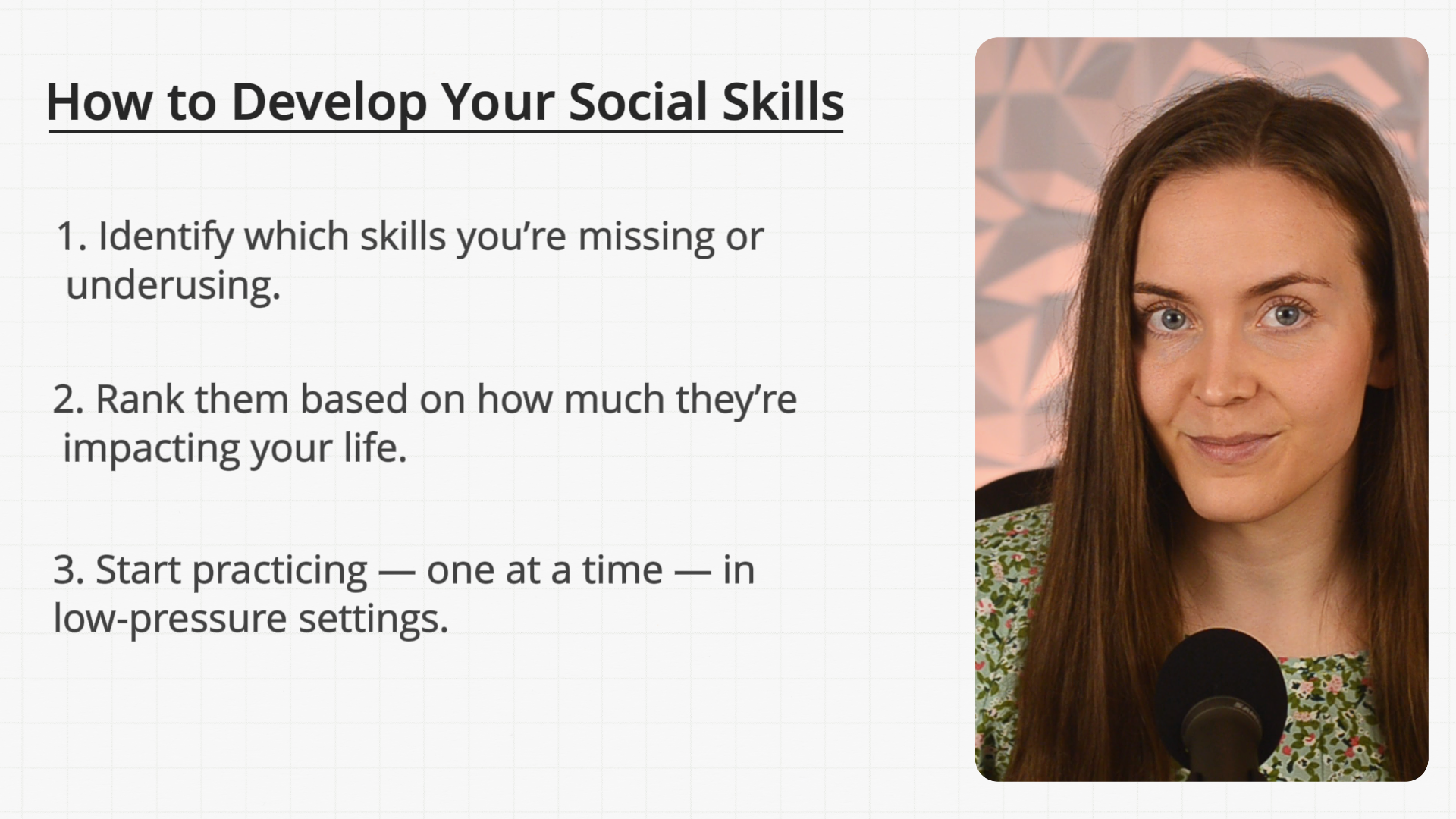
A man we’re working with began reparenting himself in this area by building awareness of where his social skills were underdeveloped.
He started by going through a list of skills — things like active listening, holding eye contact, conflict resolution, and nonverbal communication.
Then we spent two sessions identifying which ones were missing or underused, and ranked them from the ones having the least negative impact on his life to the ones having the most.
At the top of that list was eye contact.
So, every day, he practiced it in low-pressure settings — like at the grocery store, the farmers market, or in brief conversations with neighbors.
After each interaction, he took a moment to reflect on how it went and looked for one small way to improve the next time.
And we kept going — one skill at a time — slowly helping him rebuild the social skills he needed to connect with others in healthier, more confident ways.
If you’d like to try this yourself, you can Google “list of social skills” and write down as many as you can find — or open up Gemini or ChatGPT and ask:
“Can I please have a list of social skills?”
Then, go through the same process:
First, identify which skills you’re missing or underusing.
Second, rank them based on how much they’re impacting your life.
And third, start practicing — one at a time — in low-pressure settings.
8.) Connection
The eighth pillar of reparenting is connection.
This means developing the capacity to form and maintain secure relationships with others — and with yourself.
A secure relationship with others reflects secure attachment: it’s one where both people feel emotionally safe, mutually respected, and able to show up authentically.
A secure relationship with yourself is the ability to recognize your emotions, meet your needs, and stay connected to yourself rather than disconnecting, suppressing, or self-rejecting.
Jennifer says:
Connection is an important part of reparenting because narcissistic parents damage their children’s ability to form healthy relationships.
Instead of modeling secure relationships, they model narcissistic ones, that are often built on abuse, manipulation, and emotional immaturity.
As a result, their children tend to gravitate toward narcissistic people in adulthood — not because they want to, but because that dynamic feels normal and familiar.
Reparenting yourself in this area helps you build the foundation needed to move toward healthy relationships and away from unhealthy ones.
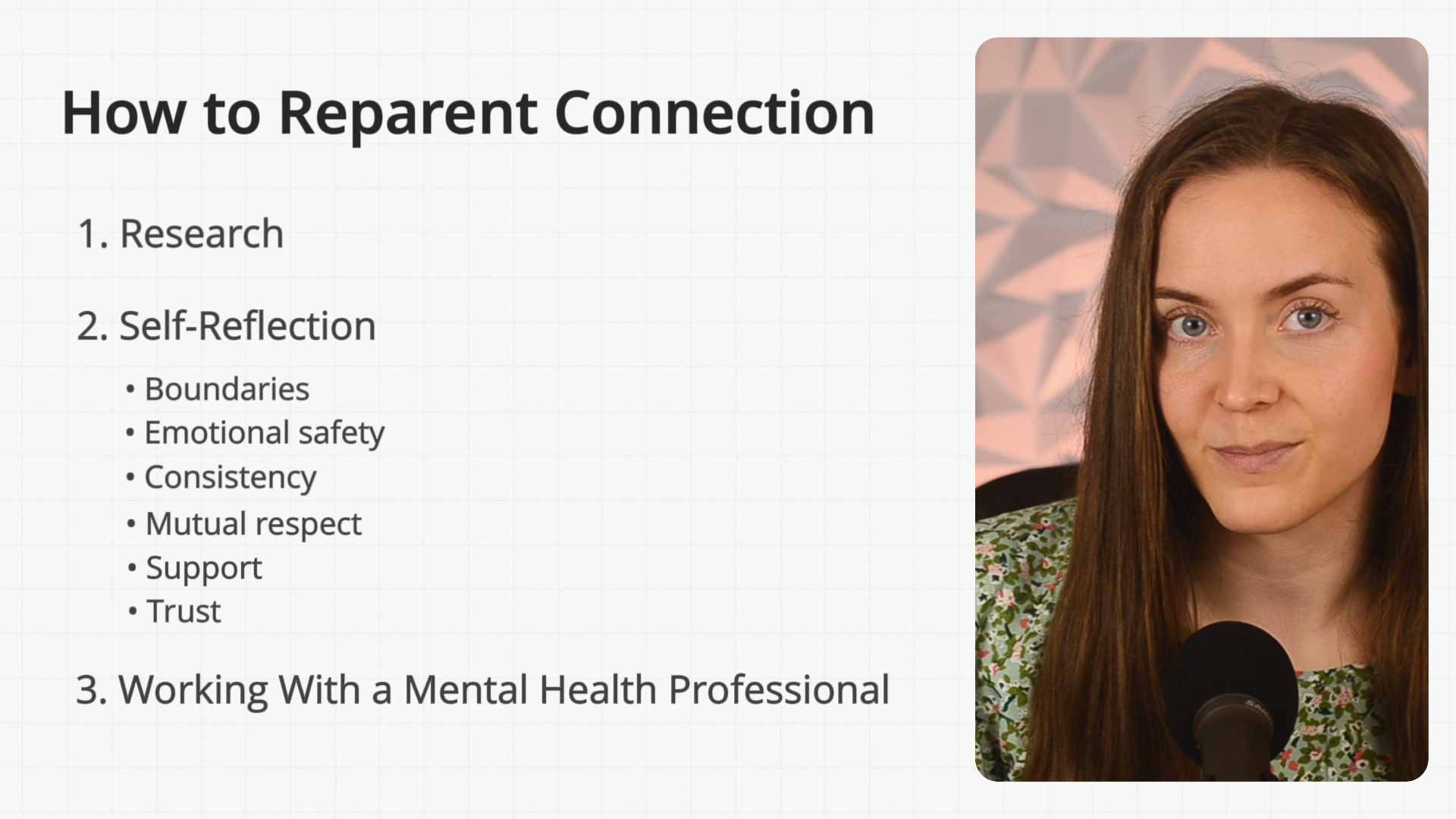
There are three steps the people we work with usually take to reparent themselves in this area.
The first is research.
This means doing as much learning as possible about what a healthy or secure relationship actually looks like — both with others and with yourself.
The second is self-reflection.
As they learn what secure relationships look like, they start highlighting the areas their relationships have been missing — things like:
- Boundaries
- Emotional safety
- Consistency
- Mutual respect
- Support
- And Trust
The third is working with a mental health professional to understand why those pieces are missing and to start learning how to build — or attract — them in future relationships.
Final Thoughts
Reparenting is a massive process.
So if you’re feeling overwhelmed or unsure where to start, that’s completely normal.
When you’re ready, I think a smart place to begin is by thinking about which of these eight pillars would have the most positive impact on your life right now — and start there.
Also…
As you go through these eight pillars, there’s a good chance you’ll experience a lot of grief.
Seeing the full extent of what was missing in your childhood can be painful in a way that’s hard to put into words — and it may hit you harder than you’d expect.
So in the next episode, I’ll walk you through a four-step framework you can use to grieve the childhood you never had — and become the adult you were always meant to be.
And I’ll link to it below as soon as it’s posted.
Read Now: How to Grieve the Childhood You Never Had
Thank you for reading today’s episode of the Unfilteredd: Narcissistic Families podcast.
If this was helpful and you’d like to read the next one, please subscribe to our newsletter — we’ll let you know as soon as the next episode is released.
My name is Juliana Akin, your guide to overcoming the effects of narcissistic abuse — and I can’t wait to connect with you in a future episode.
Subscribe to Our Newsletter
We’ll send you new episodes of the Unfilteredd: Narcissistic Families podcast 1–2 times a week, along with updates and insights to help you heal and move forward with your life.
About the Author

Hi, it’s Juliana!
I’m a founder of Unfilteredd and we help you overcome the effects of narcissistic abuse so you can heal and move forward with your life.