
“Was it abuse, or am I overreacting?”
Let’s be honest — you’re not asking that question for fun.
You’re asking because something doesn’t feel right.
But…
If you’re genuinely trying to find answers, I think it might be the wrong question to ask.
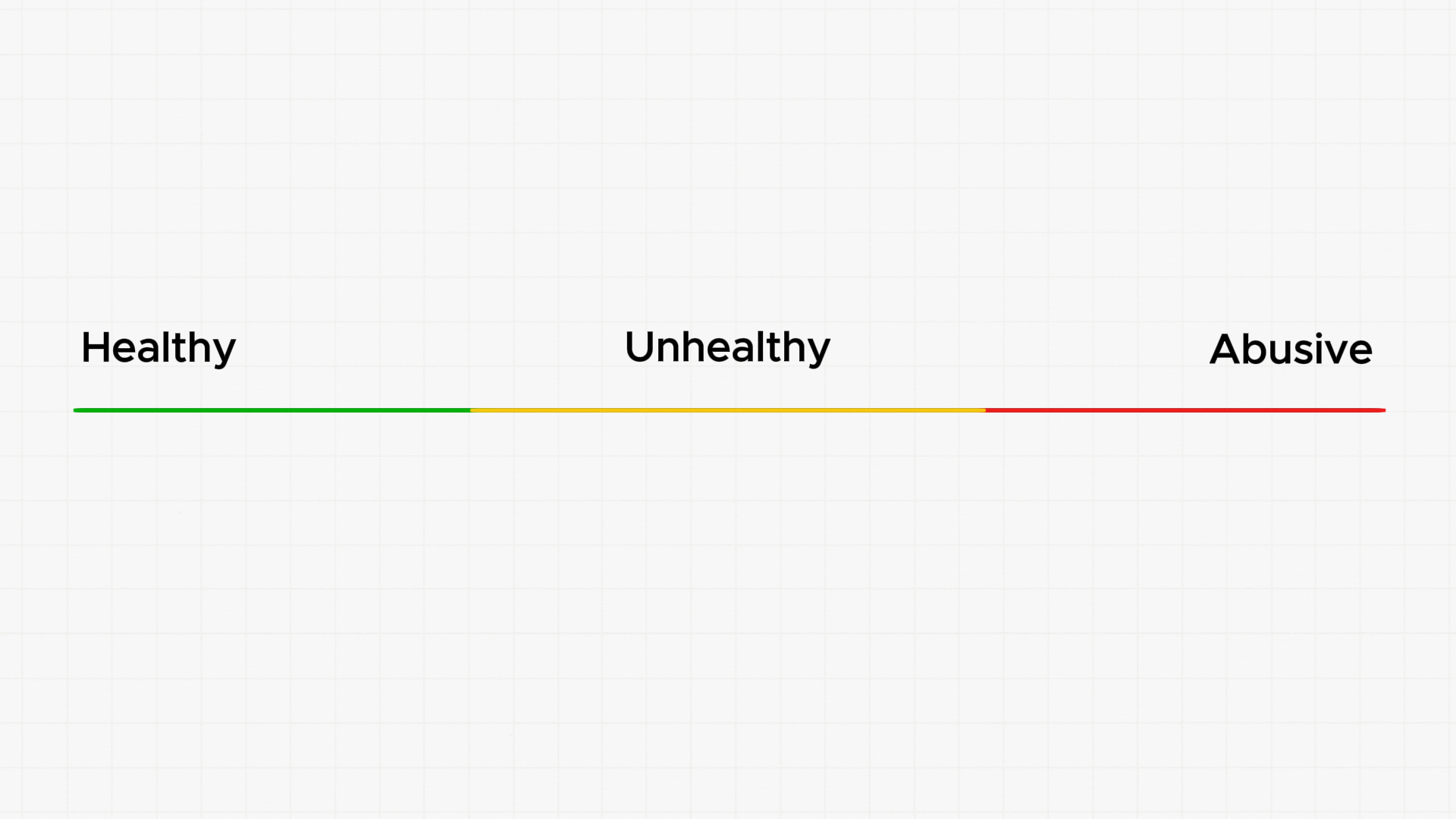
Because… the way people act in relationships exists on a continuum.
On one end, there’s healthy.
On the other end, there’s abusive.
And in the middle, there’s unhealthy.
On this continuum, there are eight different types of abuse.
- Physical
- Emotional
- Verbal
- Financial
- Spiritual
- Sexual
- Technological
- And Neglect
Some types are so severe and clear in their harm — like sexual abuse — that just one incident is enough to be considered abuse.
But other types — like emotional or financial — often need to be part of a pattern, or show signs of escalation, to really be recognized as abuse.
Because isolated incidents might be unhealthy, but not necessarily abusive.
And on top of this, abusers often use a tactic called intermittent reinforcement.
This means they mix short moments of kindness, affection, and sometimes even vulnerability, with long stretches of harmful behavior.
For example, they might do things that make you feel unsafe for three months —and then suddenly act loving and attentive for a weekend.
So, most abusive relationships don’t feel abusive 100% of the time.
And because of that, trying to answer “Was it abuse, or am I overreacting?” — especially at this stage in your healing — can feel impossible.
So, there’s one question I think you should ask instead:
“What impact has this relationship had on me and my life?”
Do you:
- Feel anxious, drained, or on edge?
- Doubt your own memory, judgment, or sense of reality?
- Put the needs, desires, and opinions of others ahead of your own?
Answering that question can give you the curiosity you need to start.
The “Why am I like this?” nudges you to watch a video, read a post, pick up a book, or even book a call with a mental health professional.
You don’t need a definitive label to begin your healing journey.
If something feels off — that’s reason enough.
And with time, you’ll start to develop the self-trust, boundaries, and perspective you need to see the relationship more clearly.
You’ll begin to understand where it actually falls on the continuum — and why.
And that, in my opinion, is how you answer:
“Was it abuse, or am I overreacting?”
Final Thoughts
Thank you for reading today’s episode of the Unfilteredd: Narcissistic Abuse podcast.
If this was helpful and you’d like to read the next one, please subscribe to our newsletter — we’ll let you know as soon as the next episode is released.
My name is Juliana Akin — your guide to overcoming the effects of narcissistic abuse — and I can’t wait to connect with you in a future episode.
Latest Posts
Subscribe to Our Newsletter
We’ll send you new episodes of the Unfilteredd: Narcissistic Abuse podcast 1–2 times a week, along with updates and insights to help you heal and move forward with your life.
About the Author

Hi, it’s Juliana!
I’m a founder of Unfilteredd and we help you overcome the effects of narcissistic abuse so you can heal and move forward with your life.